April 14, 2026 · 8 min read
Why Alloy Matters in Marine Welding, and the Mistakes We See Most
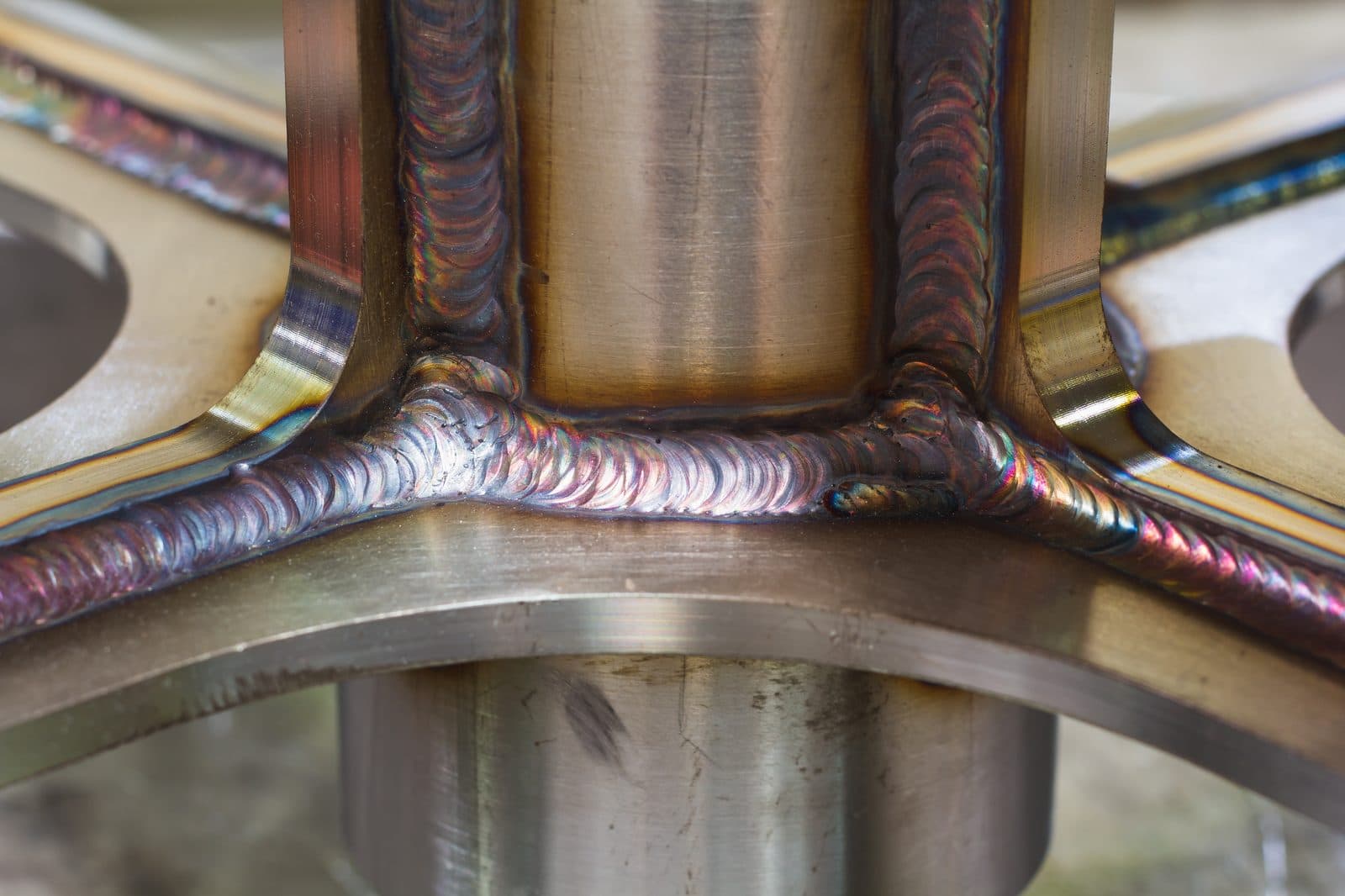
Hampton Roads is a marine economy. A big part of the welding we do is on vessels, dockside piping, marine-service equipment, and shipyard subcontract work. And a big part of that is managing alloys that aren't carbon steel.
The fastest way to get called back for a warranty repair on marine welding is to treat an alloy job like a carbon-steel job. Here's what to get right, and what we see done wrong most often.
Marine isn't one welding problem. It's at least four
Different parts of a marine system demand different alloys, and each has its own welding rules:
- Sea-water piping is usually copper-nickel (90/10 or 70/30), chosen for corrosion resistance in salt water. It welds nothing like steel.
- Hull and framing is often carbon steel or low-alloy structural. These weld like heavy civil, but with corrosion-allowance considerations.
- Fuel and potable-water lines are frequently stainless steel (304L, 316L, sometimes duplex), each with its own filler-metal requirements.
- Specialty equipment (davits, winches, anchor gear) can be anything from weldable cast to exotic alloys. Every piece wants its own procedure.
Copper-nickel: the alloy that costs us the most warranty callbacks industry-wide
90/10 copper-nickel is the marine-standard for sea-water piping because it resists chloride pitting and biofouling. But it's also unforgiving.
- Filler metal. CuNi piping wants a matching-or-overmatched filler, typically ERCuNi for GTAW. Using a bronze filler or (worse) copper-silicon (which was fine on a boat deck railing) will produce a weld that looks right and fails in months.
- Gas shielding. Argon, full shielding, with trailing cover on thicker sections. Any atmospheric contamination oxidizes the weld pool immediately.
- Joint cleanliness. Cu-Ni is fanatical about oxide. Wire-brush clean the joint with a stainless brush dedicated to non-ferrous work, never a brush that has touched carbon steel.
- Heat control. Keep heat input low to avoid grain coarsening. Interpass temperature matters. This is TIG work; don't try to hotrod it.
The mistake we see most: a welder experienced in carbon-steel piping treats CuNi like stainless and lays down a weld that's structurally okay but corrosively doomed. The sea-water side of the system notices within the first season.
Stainless steel: 304L vs 316L vs duplex
Stainless is "stainless," but not uniformly. For marine work specifically:
- 304L is fine for many dry marine applications but is prone to chloride stress-corrosion cracking in constant salt-water contact. We don't recommend it for sea-water piping.
- 316L is the workhorse for marine stainless, with better chloride resistance because of molybdenum. Weld with matching 316L filler. Don't substitute 308L because "it welds 304L fine."
- Duplex (2205 and similar) has even better chloride and pitting resistance than 316L, at higher cost. Welding duplex requires tight heat-input control and matched filler. Out-of-spec welding on duplex can shift the ferrite/austenite balance and ruin the properties that made you pick duplex in the first place.
The mistake we see most here: using the wrong L-grade filler. Non-low-carbon filler on low-carbon base metal can precipitate chromium carbide at grain boundaries in the heat-affected zone, the classic "weld decay" failure mode.
Hull and framing carbon steel: corrosion-allowance and galvanic considerations
Carbon-steel structural work on a vessel is closest to land-based structural welding, but there are a few marine-specific factors:
- Corrosion allowance. Spec sheets for marine steel often include a corrosion allowance: extra material thickness for expected corrosion over service life. Welding should preserve that allowance; undercut on the weld toe eats into it.
- Galvanic couples. Stainless-to-carbon-steel joints near sea water will galvanically corrode the carbon steel side rapidly. Either isolate them (insulating flange, gasket) or design the joint to be above the waterline.
- Coating compatibility. Welds near coated surfaces can damage the coating system, inviting corrosion at the weld toe. Post-weld coating touch-up is non-negotiable, and some projects require specific surface-prep standards (SSPC).
Procedure qualification for marine work
Most commercial marine welding runs under procedures aligned with the American Bureau of Shipping (ABS) or Coast Guard requirements, with base-code reference to AWS D1.1 or ASME Section IX depending on the assembly. Pressure systems on vessels (fuel, steam, hydraulic) almost always want ASME-qualified procedures. Structural work typically wants AWS-qualified.
If your project has an ABS surveyor involved, plan for their approval on both procedure and welder qualification, sometimes with a witnessed qualification weld before production welding can begin.
Common marine welding mistakes in order of severity
- Wrong filler metal for the alloy. Root cause of most premature corrosion failures. Rare that it's obvious on finished-weld visual inspection; shows up in service.
- Atmospheric contamination in the shielding. Porosity and oxidation on reactive alloys (CuNi, aluminum, some stainless).
- Incompatible galvanic design at the weld. The weld is fine; the joint design dooms it.
- Interpass temperature violations on duplex and stainless. Changes microstructure, reduces corrosion resistance.
- Skipped post-weld cleaning and passivation on stainless. Weld heat tint is a corrosion-initiation site. Clean and passivate or it pits first.
What to ask your welder before marine work starts
- What filler metal are you using and why?
- What procedure is this under: AWS, ASME, or ABS?
- What's the shielding plan if we're outdoors?
- What's the post-weld cleaning / passivation plan for stainless?
- Who's the inspector and what do they want to see?
A welder who can answer these without thinking about it is the one you want. A welder who gets vague has probably burned a few clients before you.
Marine welding across Hampton Roads is a growing part of what we do. Copper-nickel, stainless, carbon: every alloy has its own playbook and we run them all. See the marine page or call 757-773-9129 to discuss your project.
More field notes
Keep reading.
AWS Certification: What It Actually Means for Your Industrial Welding Project
AWS D1.1 certification isn't a marketing badge. It's a documented procedure and qualified welder. Here's what to expect when your project requires it.
Mobile Welding vs. In-Shop: When to Call a Rig, When to Haul It In
Most industrial welding clients don't know whether their job should go to a mobile rig or our shop. Here's the decision framework we use.